"use client";
import { cva } from "class-variance-authority";
import {
createContext,
useCallback,
useContext,
useEffect,
useEffectEvent,
useId,
useLayoutEffect,
useMemo,
useRef,
useState,
} from "react";
import type {
ComponentProps,
CSSProperties,
KeyboardEvent,
PointerEvent,
RefObject,
} from "react";
import { useAudioConfig } from "@/hooks/use-audio-config";
import type { AudioSize } from "@/hooks/use-audio-config";
import { getSharedAudioContext } from "@/hooks/use-audio-context";
import { clamp } from "@/lib/audio/decibels";
import { linearTaper, logTaper } from "@/lib/audio/taper";
import type { Taper } from "@/lib/audio/types";
import { cn } from "@/lib/utils";
const VIEWBOX = 100;
const CENTER = 50;
const RADIUS = 40;
const FINE_FACTOR = 0.1;
const PRECISION = 1e6;
const DEGREES_TO_RADIANS = Math.PI / 180;
const HALF_TURN = 180;
export type KnobChangeReason =
| "drag"
| "keyboard"
| "wheel"
| "reset"
| "input";
export interface KnobChangeDetails {
reason: KnobChangeReason;
event?: Event;
}
interface KnobContextValue {
value: number;
position: number;
originPosition: number;
arc: number;
labelId: string;
disabled: boolean;
format: (value: number) => string;
parse: (text: string) => number | null;
/** Characters in the widest value, for a steady value label. */
valueWidth: number;
/** A typed value is being entered in KnobValue. */
editing: boolean;
setEditing: (editing: boolean) => void;
}
const KnobContext = createContext<KnobContextValue | null>(null);
const useKnob = (part: string) => {
const context = useContext(KnobContext);
if (!context) {
throw new Error(`${part} must be used inside Knob.`);
}
return context;
};
interface KnobDialContextValue {
change: (value: number, details: KnobChangeDetails) => void;
commit: (value: number) => void;
dragDirection: "vertical" | "horizontal" | "circular";
fineStep: number;
largeStep: number;
latestRef: RefObject<number>;
max: number;
min: number;
quantize: (value: number, increment: number) => number;
resetValue: number;
sensitivity: number;
step: number;
taper: Taper;
allowWheel: boolean;
/** KnobScale reports its long ticks, so the click sound lands on them. */
setDetents: (positions: readonly number[] | null) => void;
}
const KnobDialContext = createContext<KnobDialContextValue | null>(null);
const useKnobDial = () => {
const context = useContext(KnobDialContext);
if (!context) {
throw new Error("KnobDial must be used inside Knob.");
}
return context;
};
const roundValue = (value: number) => Math.round(value * PRECISION) / PRECISION;
/** Points along the range sampled to find the widest value text. */
const WIDTH_SAMPLES = 24;
/** Characters in the widest value along the range, so the value keeps one width. */
const widestValue = (
format: (value: number) => string,
taper: Taper,
snap: (value: number) => number
) => {
let widest = 0;
for (let index = 0; index <= WIDTH_SAMPLES; index += 1) {
const sample = snap(taper.toValue(index / WIDTH_SAMPLES));
widest = Math.max(widest, format(sample).length);
}
return widest;
};
const NUMBER = /[-+]?(?:\d+\.?\d*|\.\d+)/u;
const THOUSANDS = /\d\s*k/iu;
const THOUSAND = 1000;
/** The first number in the text. "−" counts as a minus and "k" as thousands. */
export const parseKnobValue = (text: string): number | null => {
const normalized = text.replaceAll("\u2212", "-");
const match = NUMBER.exec(normalized);
if (!match) {
return null;
}
const number = Number(match[0]);
return THOUSANDS.test(normalized) ? number * THOUSAND : number;
};
const angleFor = (position: number, arc: number) => -arc / 2 + position * arc;
/** Coordinates are rounded so server and browser trigonometry agree on hydration. */
const COORDINATE_PRECISION = 1e4;
const roundCoordinate = (value: number) =>
Math.round(value * COORDINATE_PRECISION) / COORDINATE_PRECISION;
const pointAt = (angle: number, radius: number) => {
const radians = angle * DEGREES_TO_RADIANS;
return {
x: roundCoordinate(CENTER + radius * Math.sin(radians)),
y: roundCoordinate(CENTER - radius * Math.cos(radians)),
};
};
const arcPath = (fromAngle: number, toAngle: number, radius = RADIUS) => {
const start = Math.min(fromAngle, toAngle);
const end = Math.max(fromAngle, toAngle);
if (end - start < 0.01) {
return "";
}
const from = pointAt(start, radius);
const to = pointAt(end, radius);
const largeArc = end - start > HALF_TURN ? 1 : 0;
return `M ${from.x} ${from.y} A ${radius} ${radius} 0 ${largeArc} 1 ${to.x} ${to.y}`;
};
/** A ref that always holds the latest value, for event handlers. */
const useLatest = <T,>(value: T): RefObject<T> => {
const ref = useRef(value);
useLayoutEffect(() => {
ref.current = value;
});
return ref;
};
const keyTarget = (
key: string,
current: number,
increment: number,
dial: KnobDialContextValue
): number | null => {
const targets: Record<string, number> = {
ArrowDown: current - increment,
ArrowLeft: current - increment,
ArrowRight: current + increment,
ArrowUp: current + increment,
End: dial.max,
Home: dial.min,
PageDown: current - dial.largeStep,
PageUp: current + dial.largeStep,
};
return targets[key] ?? null;
};
const incrementFor = (
event: { altKey: boolean; shiftKey: boolean },
dial: KnobDialContextValue
) => {
if (event.altKey) {
return dial.fineStep;
}
return event.shiftKey ? dial.largeStep : dial.step;
};
interface DragState {
x: number;
y: number;
position: number;
/** The pointer's angle around the dial, or null too close to its centre. */
angle: number | null;
}
/** Share of the dial's radius around its centre where the angle is too jumpy to read. */
const DEAD_ZONE = 0.25;
/** The pointer's angle around the dial centre, clockwise from 12 o'clock. */
const pointerAngle = (
event: { clientX: number; clientY: number },
element: HTMLElement
): number | null => {
const rect = element.getBoundingClientRect();
const x = event.clientX - (rect.left + rect.width / 2);
const y = event.clientY - (rect.top + rect.height / 2);
if (Math.hypot(x, y) < (rect.width / 2) * DEAD_ZONE) {
return null;
}
return Math.atan2(x, -y) / DEGREES_TO_RADIANS;
};
/** The pointer's angle for circular drags; other drags only need its position. */
const dragAngle = (
event: PointerEvent<HTMLDivElement>,
dial: KnobDialContextValue
) =>
dial.dragDirection === "circular"
? pointerAngle(event, event.currentTarget)
: null;
/** The shortest turn from one angle to another, in -180..180 degrees. */
const turnBetween = (from: number, to: number) =>
((to - from + HALF_TURN * 3) % (HALF_TURN * 2)) - HALF_TURN;
/**
* The next position, from the movement since the last pointer event, so
* pressing or releasing Shift mid-drag changes the speed without a jump.
* Circular drags add the turn since the last event, so the knob turns from
* where it is grabbed and stops at its ends instead of wrapping across the gap.
*/
const dragPosition = (
event: PointerEvent<HTMLDivElement>,
last: DragState,
angle: number | null,
dial: KnobDialContextValue,
arc: number
) => {
const fine = event.shiftKey ? FINE_FACTOR : 1;
if (dial.dragDirection === "circular") {
if (last.angle === null || angle === null) {
return last.position;
}
const turn = turnBetween(last.angle, angle);
return clamp(last.position + (turn / arc) * fine, 0, 1);
}
const delta =
dial.dragDirection === "vertical"
? last.y - event.clientY
: event.clientX - last.x;
return clamp(last.position + (delta / dial.sensitivity) * fine, 0, 1);
};
const useDialWheel = (
elementRef: RefObject<HTMLDivElement | null>,
dial: KnobDialContextValue,
disabled: boolean
) => {
const { allowWheel } = dial;
const onWheel = useEffectEvent(
(event: WheelEvent, element: HTMLDivElement) => {
// Shift turns the wheel sideways on some systems.
const delta = event.deltaY || event.deltaX;
if (disabled || document.activeElement !== element || delta === 0) {
return;
}
event.preventDefault();
const fine = event.shiftKey || event.altKey;
const increment = fine ? dial.fineStep : dial.step;
const direction = delta < 0 ? 1 : -1;
const next = dial.quantize(
dial.latestRef.current + direction * increment,
increment
);
dial.change(next, { event, reason: "wheel" });
dial.commit(next);
}
);
// A non-passive listener blocks scrolling, so only attach one when the
// wheel is allowed.
useEffect(() => {
const element = elementRef.current;
if (!(element && allowWheel)) {
return;
}
const listener = (event: WheelEvent) => {
onWheel(event, element);
};
element.addEventListener("wheel", listener, { passive: false });
return () => {
element.removeEventListener("wheel", listener);
};
}, [allowWheel, elementRef]);
};
export const KnobDial = ({
className,
children,
style,
...props
}: ComponentProps<"div">) => {
const { arc, disabled, format, labelId, position, setEditing, value } =
useKnob("KnobDial");
const dial = useKnobDial();
const dialRef = useRef<HTMLDivElement>(null);
const dragRef = useRef<DragState | null>(null);
const [dragging, setDragging] = useState(false);
useDialWheel(dialRef, dial, disabled);
const reset = () => {
dial.change(dial.resetValue, { reason: "reset" });
dial.commit(dial.resetValue);
};
const handleKeyDown = (event: KeyboardEvent<HTMLDivElement>) => {
if (disabled) {
return;
}
if (event.key === "Enter") {
event.preventDefault();
setEditing(true);
return;
}
const increment = incrementFor(event, dial);
const next = keyTarget(event.key, dial.latestRef.current, increment, dial);
if (next === null) {
return;
}
event.preventDefault();
const quantized = dial.quantize(next, Math.min(increment, dial.step));
dial.change(quantized, { event: event.nativeEvent, reason: "keyboard" });
dial.commit(quantized);
};
const handlePointerDown = (event: PointerEvent<HTMLDivElement>) => {
if (disabled || event.button !== 0) {
return;
}
if (event.altKey) {
event.preventDefault();
reset();
return;
}
event.currentTarget.setPointerCapture(event.pointerId);
event.currentTarget.focus();
dragRef.current = {
angle: dragAngle(event, dial),
position: dial.taper.toPosition(dial.latestRef.current),
x: event.clientX,
y: event.clientY,
};
setDragging(true);
};
const handlePointerMove = (event: PointerEvent<HTMLDivElement>) => {
const last = dragRef.current;
if (!last) {
return;
}
const angle = dragAngle(event, dial);
const next = dragPosition(event, last, angle, dial, arc);
dragRef.current = {
angle,
position: next,
x: event.clientX,
y: event.clientY,
};
const increment = event.shiftKey ? dial.fineStep : dial.step;
dial.change(dial.quantize(dial.taper.toValue(next), increment), {
event: event.nativeEvent,
reason: "drag",
});
};
const endDrag = (event: PointerEvent<HTMLDivElement>) => {
if (!dragRef.current) {
return;
}
dragRef.current = null;
setDragging(false);
if (event.currentTarget.hasPointerCapture(event.pointerId)) {
event.currentTarget.releasePointerCapture(event.pointerId);
}
dial.commit(dial.latestRef.current);
};
return (
<div
aria-disabled={disabled || undefined}
aria-labelledby={labelId}
aria-valuemax={dial.max}
aria-valuemin={dial.min}
aria-valuenow={value}
aria-valuetext={format(value)}
className={cn(
"group/knob-dial pointer-events-none relative size-(--knob-size) touch-none rounded-full outline-none data-dragging:pointer-events-auto",
{
"data-dragging:cursor-ew-resize": dial.dragDirection === "horizontal",
"data-dragging:cursor-grabbing": dial.dragDirection === "circular",
"data-dragging:cursor-ns-resize": dial.dragDirection === "vertical",
},
className
)}
data-dragging={dragging ? "" : undefined}
data-slot="knob-dial"
onDoubleClick={() => {
if (!disabled) {
reset();
}
}}
onKeyDown={handleKeyDown}
onLostPointerCapture={endDrag}
onPointerDown={handlePointerDown}
onPointerMove={handlePointerMove}
onPointerUp={endDrag}
ref={dialRef}
role="slider"
style={
{
"--knob-angle": `${angleFor(position, arc)}deg`,
...style,
} as CSSProperties
}
tabIndex={disabled ? -1 : 0}
{...props}
>
<svg
aria-hidden
className="size-full overflow-visible"
viewBox={`0 0 ${VIEWBOX} ${VIEWBOX}`}
>
{children}
<circle
className="[pointer-events:all] cursor-grab touch-none group-aria-disabled/knob-dial:cursor-default group-data-dragging/knob-dial:cursor-[inherit]"
cx={CENTER}
cy={CENTER}
data-slot="knob-hit-area"
fill="none"
r={CENTER}
/>
</svg>
</div>
);
};
export const KnobTrack = ({ className, ...props }: ComponentProps<"path">) => {
const { arc } = useKnob("KnobTrack");
return (
<path
className={cn("stroke-input", className)}
d={arcPath(-arc / 2, arc / 2)}
data-slot="knob-track"
fill="none"
strokeLinecap="round"
strokeWidth={8}
{...props}
/>
);
};
export const KnobRange = ({ className, ...props }: ComponentProps<"path">) => {
const { arc, originPosition, position } = useKnob("KnobRange");
return (
<path
className={cn("stroke-primary", className)}
d={arcPath(angleFor(originPosition, arc), angleFor(position, arc))}
data-slot="knob-range"
fill="none"
strokeLinecap="round"
strokeWidth={8}
{...props}
/>
);
};
export const KnobPointer = ({
className,
...props
}: ComponentProps<"line">) => {
const { arc, position } = useKnob("KnobPointer");
const angle = angleFor(position, arc);
const inner = pointAt(angle, RADIUS * 0.3);
const outer = pointAt(angle, RADIUS * 0.72);
return (
<>
<circle
className="fill-muted stroke-border"
cx={CENTER}
cy={CENTER}
r={RADIUS * 0.8}
strokeWidth={1}
/>
<line
className={cn("stroke-foreground", className)}
data-slot="knob-pointer"
strokeLinecap="round"
strokeWidth={6}
x1={inner.x}
x2={outer.x}
y1={inner.y}
y2={outer.y}
{...props}
/>
</>
);
};
/** Radii of the volume dial, in view box units. */
const SCALE = {
label: 47.5,
labelSize: 4.5,
majorInner: 34.5,
majorOuter: 43.5,
minorInner: 35.5,
minorOuter: 40.5,
} as const;
/**
* Radii of the cap, in view box units: inside a KnobScale by default, or
* filling the inside of a KnobTrack when mini. The shadow starts at `haloFrom`
* of the halo's radius.
*/
const CAP = {
default: {
bezel: 25.5,
face: 22.5,
halo: 34,
haloFrom: 0.6,
rim: 23.3,
},
mini: {
bezel: 32,
face: 28.2,
halo: 36,
haloFrom: 0.8,
rim: 29.2,
},
} as const;
/** The default cap's indicator dot. */
const CAP_DOT = { distance: 17, radius: 1.6 } as const;
/** The mini cap's engraved indicator line, which reads at small sizes. */
const CAP_LINE = { inner: 8.5, lip: 0.6, outer: 23, width: 3.4 } as const;
/** Ticks this close to the lit range's ends still count as lit. */
const TICK_EPSILON = 1e-9;
export interface KnobScaleProps extends Omit<ComponentProps<"g">, "format"> {
/** Divisions across the arc; draws `ticks + 1` marks. Default 50. */
ticks?: number;
/** Every nth tick is long. Default 5. */
majorEvery?: number;
/** Every nth tick is numbered; 0 hides the numbers. Default 10. */
labelEvery?: number;
/** Text for each number. Default: the knob's `format`. */
format?: (value: number) => string;
}
/** Tick marks and numbers around the dial, lit from `origin` to the value. */
export const KnobScale = ({
ticks = 50,
majorEvery = 5,
labelEvery = 10,
format: formatProp,
className,
...props
}: KnobScaleProps) => {
const { arc, format, originPosition, position } = useKnob("KnobScale");
const { setDetents, taper } = useKnobDial();
const formatLabel = formatProp ?? format;
const litFrom = Math.min(originPosition, position) - TICK_EPSILON;
const litTo = Math.max(originPosition, position) + TICK_EPSILON;
const count = Math.max(1, Math.round(ticks));
// One step for the long ticks drawn and the detents they click on.
const majorStep = Math.max(1, Math.round(majorEvery));
useEffect(() => {
const majors: number[] = [];
for (let index = 0; index <= count; index += majorStep) {
majors.push(index / count);
}
setDetents(majors);
return () => {
setDetents(null);
};
}, [count, majorStep, setDetents]);
const marks = Array.from({ length: count + 1 }, (_, index) => {
const tickPosition = index / count;
const angle = angleFor(tickPosition, arc);
const major = index % majorStep === 0;
const inner = pointAt(angle, major ? SCALE.majorInner : SCALE.minorInner);
const outer = pointAt(angle, major ? SCALE.majorOuter : SCALE.minorOuter);
const lit = tickPosition >= litFrom && tickPosition <= litTo;
return (
<line
className="stroke-muted-foreground/45 data-active:stroke-foreground data-major:stroke-muted-foreground data-major:data-active:stroke-foreground"
data-active={lit ? "" : undefined}
data-major={major ? "" : undefined}
data-slot="knob-tick"
key={index}
strokeWidth={major ? 1.1 : 0.55}
x1={inner.x}
x2={outer.x}
y1={inner.y}
y2={outer.y}
/>
);
});
const labels =
labelEvery > 0
? Array.from(
{ length: Math.floor(count / labelEvery) + 1 },
(_, index) => {
const tickPosition = (index * labelEvery) / count;
const angle = angleFor(tickPosition, arc);
const { x, y } = pointAt(angle, SCALE.label);
return (
<text
className="fill-muted-foreground"
data-slot="knob-scale-label"
dominantBaseline="central"
fontSize={SCALE.labelSize}
key={tickPosition}
textAnchor="middle"
transform={`rotate(${angle} ${x} ${y})`}
x={x}
y={y}
>
{formatLabel(roundValue(taper.toValue(tickPosition)))}
</text>
);
}
)
: null;
return (
<g className={className} data-slot="knob-scale" {...props}>
{marks}
{labels}
</g>
);
};
/** An id that is safe inside `url(#…)`. */
const useSvgId = () => `knob${useId().replaceAll(/[^\w-]/gu, "")}`;
const knobCapVariants = cva(
"[--knob-cap-metal:var(--color-white)] [--knob-cap-shade:var(--color-black)]",
{
defaultVariants: { variant: "default" },
variants: {
variant: {
default: "[--knob-cap-pitch:0.3px]",
mini: "[--knob-cap-pitch:0.9px]",
},
},
}
);
type KnobCapVariant = "default" | "mini";
/** The value marker: a dot on the default cap, an engraved line on the mini one. */
const KnobCapIndicator = ({
angle,
variant,
}: {
angle: number;
variant: KnobCapVariant;
}) => {
if (variant === "default") {
const dot = pointAt(angle, CAP_DOT.distance);
return (
<circle
className="fill-(--knob-cap-shade)/85 stroke-(--knob-cap-shade)/45"
cx={dot.x}
cy={dot.y}
data-slot="knob-cap-dot"
r={CAP_DOT.radius}
strokeWidth={0.35}
/>
);
}
const inner = pointAt(angle, CAP_LINE.inner);
const outer = pointAt(angle, CAP_LINE.outer);
return (
<>
{/* Light from above catches the groove's lower wall. */}
<line
className="stroke-(--knob-cap-metal)/70"
strokeLinecap="round"
strokeWidth={CAP_LINE.width}
x1={inner.x}
x2={outer.x}
y1={inner.y + CAP_LINE.lip}
y2={outer.y + CAP_LINE.lip}
/>
<line
className="stroke-(--knob-cap-shade)/80"
data-slot="knob-cap-pointer"
strokeLinecap="round"
strokeWidth={CAP_LINE.width}
x1={inner.x}
x2={outer.x}
y1={inner.y}
y2={outer.y}
/>
</>
);
};
export interface KnobCapProps extends ComponentProps<"g"> {
/**
* `default` sits inside a KnobScale and marks the value with a dot. `mini`
* fills the inside of a KnobTrack and marks it with an engraved line, for
* small knobs. Default `default`.
*/
variant?: KnobCapVariant;
}
/**
* A brushed aluminium cap in a dark bezel, with a marker that turns with the
* value. The metal is `--knob-cap-metal` shaded by `--knob-cap-shade`.
*/
export const KnobCap = ({
variant = "default",
className,
...props
}: KnobCapProps) => {
const { arc, position } = useKnob("KnobCap");
const id = useSvgId();
const angle = angleFor(position, arc);
const cap = CAP[variant];
return (
<g
className={cn(knobCapVariants({ variant }), className)}
data-slot="knob-cap"
data-variant={variant}
{...props}
>
<defs>
<filter height="100%" id={`${id}-grain`} width="100%" x="0" y="0">
<feTurbulence
baseFrequency={0.9}
numOctaves={3}
seed={7}
type="fractalNoise"
/>
<feColorMatrix type="saturate" values="0" />
<feComposite in2="SourceGraphic" operator="in" />
</filter>
<radialGradient id={`${id}-halo`}>
<stop
className="[stop-color:var(--knob-cap-shade)]"
offset={cap.haloFrom}
stopOpacity={0.55}
/>
<stop
className="[stop-color:var(--knob-cap-shade)]"
offset="1"
stopOpacity={0}
/>
</radialGradient>
{/* Light from above: the bezel brightens at the top, the rim at the bottom. */}
<linearGradient id={`${id}-bezel`} x1="0" x2="0" y1="0" y2="1">
<stop
className="[stop-color:var(--knob-cap-metal)]"
offset="0"
stopOpacity={0.16}
/>
<stop
className="[stop-color:var(--knob-cap-metal)]"
offset="1"
stopOpacity={0}
/>
</linearGradient>
<linearGradient id={`${id}-rim`} x1="0" x2="0" y1="0" y2="1">
<stop
className="[stop-color:var(--knob-cap-shade)]"
offset="0"
stopOpacity={0.62}
/>
<stop
className="[stop-color:var(--knob-cap-shade)]"
offset="1"
stopOpacity={0.08}
/>
</linearGradient>
</defs>
<circle cx={CENTER} cy={CENTER} fill={`url(#${id}-halo)`} r={cap.halo} />
<circle
className="fill-(--knob-cap-shade)/85 stroke-(--knob-cap-metal)/15"
cx={CENTER}
cy={CENTER}
r={cap.bezel}
strokeWidth={0.4}
/>
<circle
cx={CENTER}
cy={CENTER}
fill={`url(#${id}-bezel)`}
r={cap.bezel}
/>
<circle
className="fill-(--knob-cap-metal)"
cx={CENTER}
cy={CENTER}
r={cap.rim}
/>
<circle cx={CENTER} cy={CENTER} fill={`url(#${id}-rim)`} r={cap.rim} />
{/* SVG has no conic gradient, so the face is HTML with a CSS one. */}
<foreignObject
height={cap.face * 2}
width={cap.face * 2}
x={CENTER - cap.face}
y={CENTER - cap.face}
>
<div
className="size-full rounded-full bg-(--knob-cap-metal) bg-[repeating-radial-gradient(circle,var(--knob-cap-brush)_0_var(--knob-cap-pitch),transparent_var(--knob-cap-pitch)_calc(var(--knob-cap-pitch)*2)),conic-gradient(from_15deg,var(--knob-cap-sheen),transparent_9%,var(--knob-cap-sheen)_21%,transparent_32%,var(--knob-cap-sheen-deep)_46%,transparent_58%,var(--knob-cap-sheen)_70%,transparent_83%,var(--knob-cap-sheen))] [--knob-cap-brush:color-mix(in_oklab,var(--knob-cap-shade)_7%,transparent)] [--knob-cap-sheen-deep:color-mix(in_oklab,var(--knob-cap-shade)_50%,transparent)] [--knob-cap-sheen:color-mix(in_oklab,var(--knob-cap-shade)_34%,transparent)]"
data-slot="knob-cap-face"
/>
</foreignObject>
<circle
cx={CENTER}
cy={CENTER}
data-slot="knob-cap-grain"
filter={`url(#${id}-grain)`}
opacity={0.25}
pointerEvents="none"
r={cap.face}
transform={`rotate(${angle} ${CENTER} ${CENTER})`}
/>
<KnobCapIndicator angle={angle} variant={variant} />
</g>
);
};
const focusDial = (from: HTMLElement) => {
from
.closest("[data-slot='knob']")
?.querySelector<HTMLElement>("[data-slot='knob-dial']")
?.focus();
};
/** The inline editor KnobValue shows while a value is typed. */
const KnobValueInput = ({
className,
style,
}: Pick<ComponentProps<"input">, "className" | "style">) => {
const { format, parse, setEditing, value } = useKnob("KnobValue");
const dial = useKnobDial();
const [draft, setDraft] = useState(() => format(value));
const doneRef = useRef(false);
const focusInput = useCallback((node: HTMLInputElement | null) => {
node?.focus();
node?.select();
}, []);
const finish = (apply: boolean) => {
if (doneRef.current) {
return;
}
doneRef.current = true;
setEditing(false);
const parsed = apply ? parse(draft) : null;
if (parsed === null || Number.isNaN(parsed)) {
return;
}
const next = dial.quantize(
clamp(parsed, dial.min, dial.max),
Math.min(dial.fineStep, dial.step)
);
dial.change(next, { reason: "input" });
dial.commit(next);
};
return (
<input
aria-label="Value"
className={cn(
"bg-background ring-ring/50 focus-visible:ring-foreground h-4 w-(--knob-value-width) min-w-0 rounded-sm p-0 text-center font-mono text-xs tabular-nums ring-1 outline-none focus-visible:ring-2",
className
)}
data-slot="knob-value-input"
onBlur={() => finish(true)}
onChange={(event) => setDraft(event.target.value)}
onKeyDown={(event) => {
if (event.key !== "Enter" && event.key !== "Escape") {
return;
}
event.preventDefault();
const input = event.currentTarget;
finish(event.key === "Enter");
focusDial(input);
}}
ref={focusInput}
style={style}
value={draft}
/>
);
};
export interface KnobValueProps extends ComponentProps<"span"> {
/** Double-click the value, or press Enter on the dial, to type one. Default true. */
editable?: boolean;
}
export const KnobValue = ({
editable = true,
className,
style,
onDoubleClick,
...props
}: KnobValueProps) => {
const { disabled, editing, format, setEditing, value, valueWidth } =
useKnob("KnobValue");
const widthStyle = {
"--knob-value-width": `${valueWidth}ch`,
...style,
} as CSSProperties;
if (editable && editing) {
return <KnobValueInput className={className} style={widthStyle} />;
}
return (
<span
className={cn(
"text-muted-foreground inline-block min-w-(--knob-value-width) text-center font-mono text-xs whitespace-nowrap tabular-nums",
editable && !disabled && "cursor-text",
className
)}
data-slot="knob-value"
onDoubleClick={(event) => {
onDoubleClick?.(event);
if (editable && !disabled) {
setEditing(true);
}
}}
style={widthStyle}
{...props}
>
{format(value)}
</span>
);
};
export const KnobLabel = ({
className,
onDoubleClick,
...props
}: ComponentProps<"span">) => {
const { disabled, labelId, setEditing } = useKnob("KnobLabel");
return (
<span
className={cn("text-xs font-medium", className)}
data-slot="knob-label"
id={labelId}
onDoubleClick={(event) => {
onDoubleClick?.(event);
if (!disabled) {
setEditing(true);
}
}}
{...props}
/>
);
};
const knobVariants = cva(
"group/knob inline-flex flex-col items-center gap-1.5 select-none data-disabled:opacity-50",
{
defaultVariants: { size: "default" },
variants: {
size: {
default: "[--knob-size:3rem]",
lg: "[--knob-size:4rem]",
sm: "[--knob-size:2.25rem]",
},
},
}
);
export interface KnobProps extends Omit<
ComponentProps<"div">,
"defaultValue" | "onChange"
> {
value?: number;
defaultValue?: number;
onValueChange?: (value: number, details: KnobChangeDetails) => void;
onValueCommitted?: (value: number) => void;
/** Default 0. */
min?: number;
/** Default 100. */
max?: number;
/** Default 1. */
step?: number;
/** Default 10. */
largeStep?: number;
/** Shift+drag, Shift+wheel and Alt+arrow. Default: `step / 10`. */
fineStep?: number;
/** Double-click or Alt+click restores this. Default `defaultValue` or `min`. */
resetValue?: number;
/** Where the arc starts; the centre for bipolar knobs. Default `min`. */
origin?: number;
/** Sweep in degrees. Default 270. */
arc?: number;
/** How dragging turns the knob. Default `vertical`. */
dragDirection?: "vertical" | "horizontal" | "circular";
/** Pixels of vertical or horizontal drag for the full range. Default 200. */
sensitivity?: number;
/** Default `linear`. */
scale?: "linear" | "log";
/** The wheel adjusts the value while focused. Default false. */
allowWheel?: boolean;
/**
* Plays a soft click on each graduation: KnobScale's long ticks, or every
* `largeStep` without a scale. Default false.
*/
clickSound?: boolean;
format?: (value: number) => string;
/** Reads a typed value. Default: the first number, with "k" as thousands. */
parse?: (text: string) => number | null;
size?: AudioSize;
disabled?: boolean;
}
/** Shortest gap between clicks, so a fast turn ticks instead of buzzing. */
const CLICK_INTERVAL_MS = 30;
const CLICK_SECONDS = 0.006;
const CLICK_VOLUME = 0.12;
/** Each click is pitched a little at random, like a real detent. */
const CLICK_PITCH_SPREAD = 0.04;
/** A short noise snap over a high, fast-damped ring: a tick, not a thud. */
const CLICK_PARTS = [
{ decay: 0.0004, gain: 0.6, hz: 0 },
{ decay: 0.0012, gain: 0.4, hz: 4200 },
] as const;
/** Positions this close to a detent count as on it. */
const DETENT_EPSILON = 1e-9;
/** Whether moving between positions reaches or passes a detent. */
const reachesDetent = (detents: readonly number[], from: number, to: number) =>
detents.some((detent) =>
from < to
? detent > from + DETENT_EPSILON && detent <= to + DETENT_EPSILON
: detent < from - DETENT_EPSILON && detent >= to - DETENT_EPSILON
);
/** Whether moving between values reaches or passes a multiple of `every`. */
const reachesMultiple = (
from: number,
to: number,
min: number,
every: number
) => {
const start = roundValue((from - min) / every);
const end = roundValue((to - min) / every);
return from < to
? Math.floor(end) > Math.floor(start)
: Math.ceil(start) > Math.ceil(end);
};
const clickBuffers = new WeakMap<BaseAudioContext, AudioBuffer>();
let lastClickAt = Number.NEGATIVE_INFINITY;
/** One synthesised click, made once per audio context. */
const clickBuffer = (context: BaseAudioContext) => {
const cached = clickBuffers.get(context);
if (cached) {
return cached;
}
const { sampleRate } = context;
const buffer = context.createBuffer(
1,
Math.ceil(CLICK_SECONDS * sampleRate),
sampleRate
);
const samples = buffer.getChannelData(0);
for (let index = 0; index < samples.length; index += 1) {
const time = index / sampleRate;
let sample = 0;
for (const part of CLICK_PARTS) {
const wave =
part.hz === 0
? Math.random() * 2 - 1
: Math.sin(2 * Math.PI * part.hz * time);
sample += part.gain * wave * Math.exp(-time / part.decay);
}
samples[index] = sample;
}
clickBuffers.set(context, buffer);
return buffer;
};
const resumeContext = async (context: AudioContext) => {
try {
await context.resume();
} catch {
// Without a user gesture the browser refuses; the next one tries again.
}
};
/** Plays a click through the shared audio context, at most every 30 ms. */
const playClick = () => {
const now = performance.now();
const context = getSharedAudioContext();
if (!context || now - lastClickAt < CLICK_INTERVAL_MS) {
return;
}
lastClickAt = now;
if (context.state === "suspended") {
resumeContext(context);
}
const source = context.createBufferSource();
source.buffer = clickBuffer(context);
source.playbackRate.value =
1 + (Math.random() - 0.5) * CLICK_PITCH_SPREAD * 2;
const gain = context.createGain();
gain.gain.value = CLICK_VOLUME;
source.connect(gain).connect(context.destination);
source.addEventListener("ended", () => {
source.disconnect();
gain.disconnect();
});
source.start();
};
interface KnobValueOptions {
value: number | undefined;
defaultValue: number | undefined;
resetValue: number;
min: number;
max: number;
onValueChange: KnobProps["onValueChange"];
/** Whether a change between two values should click; null for silence. */
clicksBetween: ((from: number, to: number) => boolean) | null;
}
/** Controlled or uncontrolled value with change notifications. */
const useKnobValue = ({
value: valueProp,
defaultValue,
resetValue,
min,
max,
onValueChange,
clicksBetween,
}: KnobValueOptions) => {
const [uncontrolled, setUncontrolled] = useState(() =>
clamp(defaultValue ?? resetValue, min, max)
);
const value = valueProp ?? uncontrolled;
const latestRef = useLatest(value);
const controlled = valueProp !== undefined;
const change = useCallback(
(next: number, details: KnobChangeDetails) => {
const previous = latestRef.current;
if (next === previous) {
return;
}
latestRef.current = next;
if (!controlled) {
setUncontrolled(next);
}
onValueChange?.(next, details);
if (clicksBetween?.(previous, next)) {
playClick();
}
},
[clicksBetween, controlled, latestRef, onValueChange]
);
return { change, latestRef, value };
};
/** Size and disabled, from props or the surrounding strip. */
const useKnobSettings = (
size: AudioSize | undefined,
disabled: boolean | undefined
) => {
const config = useAudioConfig();
return {
disabled: disabled ?? config.disabled ?? false,
size: size ?? config.size ?? "default",
};
};
export const Knob = ({
value: valueProp,
defaultValue,
onValueChange,
onValueCommitted,
min = 0,
max = 100,
step = 1,
largeStep = 10,
fineStep,
resetValue,
origin,
arc = 270,
dragDirection = "vertical",
sensitivity = 200,
scale = "linear",
allowWheel = false,
clickSound = false,
format = String,
parse = parseKnobValue,
size: sizeProp,
disabled: disabledProp,
className,
children,
...props
}: KnobProps) => {
const { disabled, size } = useKnobSettings(sizeProp, disabledProp);
const reset = resetValue ?? defaultValue ?? min;
const labelId = useId();
const taper: Taper = useMemo(
() => (scale === "log" ? logTaper(min, max) : linearTaper(min, max)),
[max, min, scale]
);
// Clicks land on KnobScale's long ticks, or every largeStep without one.
const [detents, setDetents] = useState<readonly number[] | null>(null);
const clicksBetween = useMemo(() => {
if (!clickSound) {
return null;
}
if (detents) {
return (from: number, to: number) =>
reachesDetent(detents, taper.toPosition(from), taper.toPosition(to));
}
return (from: number, to: number) =>
reachesMultiple(from, to, min, largeStep);
}, [clickSound, detents, largeStep, min, taper]);
const { change, latestRef, value } = useKnobValue({
clicksBetween,
defaultValue,
max,
min,
onValueChange,
resetValue: reset,
value: valueProp,
});
const quantize = useCallback(
(next: number, increment: number) =>
roundValue(
clamp(min + Math.round((next - min) / increment) * increment, min, max)
),
[max, min]
);
const position = taper.toPosition(value);
const originValue = clamp(origin ?? min, min, max);
const originPosition = taper.toPosition(originValue);
const [editing, setEditing] = useState(false);
const valueWidth = useMemo(
() => widestValue(format, taper, (next) => quantize(next, step)),
[format, quantize, step, taper]
);
const contextValue = useMemo<KnobContextValue>(
() => ({
arc,
disabled,
editing,
format,
labelId,
originPosition,
parse,
position,
setEditing,
value,
valueWidth,
}),
[
arc,
disabled,
editing,
format,
labelId,
originPosition,
parse,
position,
value,
valueWidth,
]
);
const dialContext = useMemo<KnobDialContextValue>(
() => ({
allowWheel,
change,
commit: (next: number) => onValueCommitted?.(next),
dragDirection,
fineStep: fineStep ?? step * FINE_FACTOR,
largeStep,
latestRef,
max,
min,
quantize,
resetValue: reset,
sensitivity,
setDetents,
step,
taper,
}),
[
allowWheel,
change,
dragDirection,
fineStep,
largeStep,
latestRef,
max,
min,
onValueCommitted,
quantize,
reset,
sensitivity,
step,
taper,
]
);
return (
<KnobContext.Provider value={contextValue}>
<KnobDialContext.Provider value={dialContext}>
<div
className={cn(knobVariants({ size }), className)}
data-at-origin={value === originValue ? "" : undefined}
data-disabled={disabled ? "" : undefined}
data-size={size}
data-slot="knob"
{...props}
>
{children ?? (
<KnobDial>
<KnobTrack />
<KnobRange />
<KnobPointer />
</KnobDial>
)}
</div>
</KnobDialContext.Provider>
</KnobContext.Provider>
);
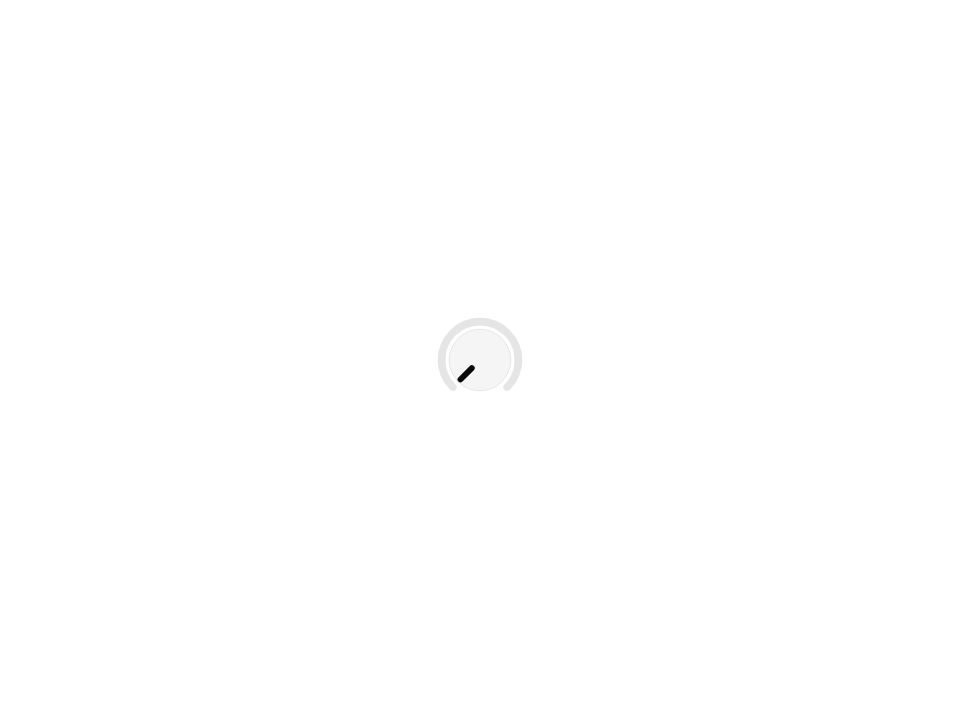
};
export { knobCapVariants, knobVariants };